Australian Capital Territory · Government, defence and campuses
Compliant Vending for Canberra Government and Defence Sites
Published 8 August 2026 · 1,079 words
The short answer
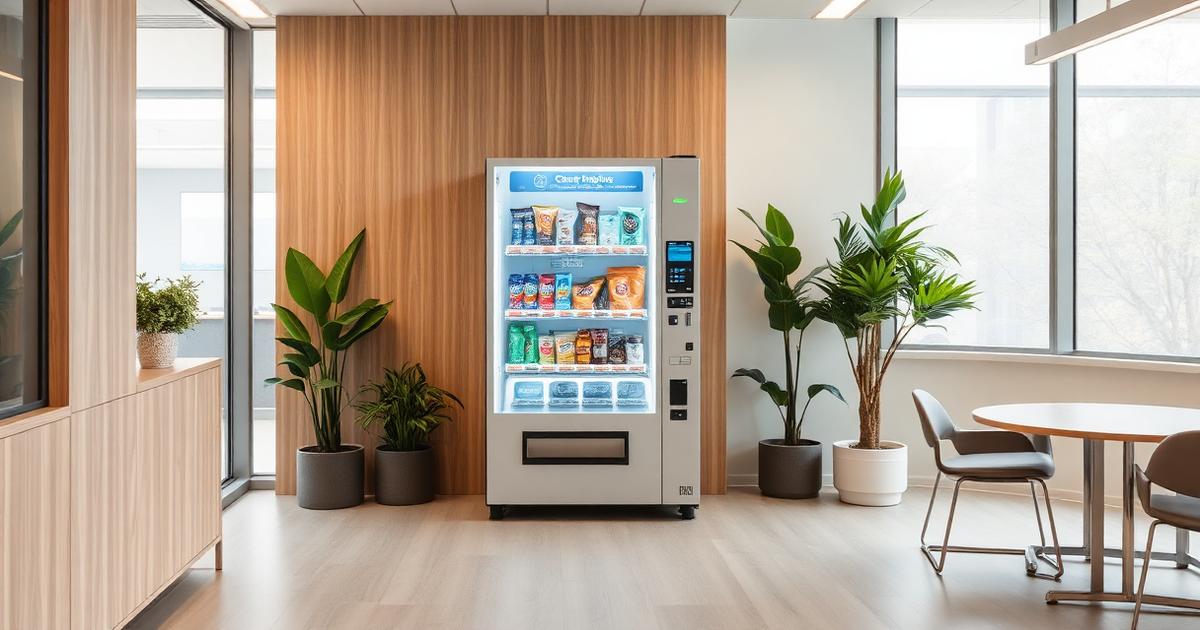
Canberra departments, defence facilities and campuses place cashless, telemetry-monitored machines in breakout and amenity areas under $0 COST hire. The operator handles inductions, security-cleared or escorted restocking and any healthy-choices ranging policy the agency applies. The site provides about one square metre of floor space and a standard 240V outlet, and carries roughly 1.2–2.5 kWh a day in electricity as the only cost.
Procurement in the Australian Capital Territory has a habit of turning small amenity decisions into long processes. Vending is the rare case where it does not have to: because $0 COST hire involves no purchase, no lease and no ongoing fee, there is nothing to competitively procure and nothing to budget. What matters instead is compliance — access, ranging policy, accessibility and reporting. Whether the site is government building vending in a departmental office or defence facility vending behind a controlled perimeter, the same four questions decide it.
Why is procurement simpler when there is no fee?
There is no capital purchase, no lease, no rental line and no service contract value, because the operator is paid by the people buying products rather than by the agency. That takes the arrangement out of the categories most Canberra procurement thresholds are written around.
What agencies do still want documented is access, insurance, work health and safety and product ranging — all of which the operator supplies as part of the placement pack.
The practical result is that a Canberra site can go from enquiry to installed machine in the time a comparable purchase would still be in market analysis.
- No purchase price, lease, rental or service contract to procure
- Certificate of currency and WHS documentation supplied up front
- Ranging policy agreed in writing before the first planogram
- Free removal with no exit cost if the arrangement is ended
How are healthy-choices ranging policies applied?
Many Australian Capital Territory agencies and campuses apply a traffic-light or green-amber-red style framework to food and drink offered on site. The planogram is built to match, with the agreed proportion of green items at eye level.
Compliance is verifiable rather than promised: because every sale is logged, the agency can see the actual mix being sold and adjust ranging if the machine drifts from policy.
Water is always the anchor line. Sites with a policy position on sugary drinks typically reduce or remove them entirely, and sales data shows the remaining range absorbs most of that demand.
What accessibility requirements apply to placement?
Machines in Canberra public and workplace areas are positioned so controls and the payment terminal are within reach range, with clear circulation space in front and no obstruction of egress paths.
Selection and payment are usable one-handed and without fine motor precision, which is one of the practical arguments for tap-and-go over coin entry.
The operator walks the location with facilities before install rather than after, because moving a levelled machine that blocks a corridor is a far more disruptive conversation than choosing a different alcove.
How does $0 COST vending machine hire work in Canberra?
Free placement — what we call $0 COST hire — means there is no purchase price, no lease, no rental fee, no insurance charge and no service fee. Machines Vending matches your Canberra site with a local vending machine owner-operator who supplies the machine, delivers and installs it, keeps it stocked and repairs it. The operator earns from product sales, and that is what funds both the placement and the ongoing service.
The commitment on your side is deliberately small. You provide roughly one square metre of floor space — the cabinet is about 1000mm wide, 900mm deep and 1830mm tall — plus a standard 240V general power outlet within reach, and trolley or lift access for restocking. There is no lock-in contract and no exit fee.
Sites from about 15–20 staff typically qualify, and in Australian Capital Territory that threshold is applied to people actually on site rather than names on a roster. If the site turns out not to suit either party the machine is removed free of charge, with the honest caveat that a placed machine does need to make sales to stay where it is.
- No purchase, lease, rental, insurance or service fee to the site
- Owner-operator supplies, delivers, installs, restocks and repairs
- About 1000mm wide, 900mm deep and 1830mm tall on a 240V outlet
- No lock-in contract and free removal if the site does not suit
- Your team pays only for what they buy from the machine
What does the machine cost to run in Australian Capital Territory?
Electricity is the only cost the host site carries. A refrigerated combo machine or smart fridge draws roughly 1.2–2.5 kWh a day, which lands between about $0.35 and $0.80 depending on the tariff your Canberra site is on and how hard the compressor has to work.
Placement is the biggest lever on that figure. A machine in direct sun, jammed against a wall or sitting next to a heat source runs its compressor far harder than the same unit in a shaded spot with 75mm of clearance behind it. Sites that move a machine out of a hot corridor commonly see consumption fall towards the bottom of that range.
Newer cabinets fitted with LED lighting, ECO night mode and variable-speed compressors sit lower again, because the unit throttles back overnight when nobody is buying and only pulls full power during trading peaks.
| Machine type | Daily draw | Indicative daily cost | Best placed |
|---|---|---|---|
| Snack & drink combo | 1.2–2.5 kWh | $0.35–$0.80 | Crib room, breakout or lobby |
| Smart fridge | 1.2–2.2 kWh | $0.35–$0.70 | Kitchen or grab-and-go corner |
| Ambient snack only | 0.4–0.8 kWh | $0.10–$0.25 | Corridor or amenities room |
| PPE / consumables | 0.2–0.5 kWh | $0.05–$0.15 | Gatehouse or store entry |
What happens on install day at a Canberra site?
Once the site is confirmed the operator books access, provides their certificate of currency where the building requires it, and delivers the machine on a trolley or through the goods lift. The unit is positioned where you nominated, levelled, plugged into the 240V outlet and the payment terminal is tested before the operator leaves.
The first product range is loaded with someone from your team present, so the opening planogram reflects what your people actually ask for rather than a generic template. Most Canberra sites make one meaningful range change in the first month and then settle.
Access rules are the single most common cause of a delayed install. Confirming dock times, induction requirements or after-hours access early usually turns a fortnight into a few working days.
- Access booking, inductions and installer insurance handled by the operator
- Delivery, positioning, levelling and power connection included
- Cashless terminal tested on site before handover
- Opening product range agreed with your team, not pre-set
- No trade work, plumbing or hard wiring required
How is the product range kept relevant over time?
Every machine reports what sells. The operator reviews that telemetry on each service visit, drops the lines nobody buys and adds more of whatever ran out, which is why the range on a machine six months in looks noticeably different to the one that arrived.
Staff requests are the other input. One email is usually enough to add a line, and sites with dietary requirements — halal, gluten free, sugar free or higher-protein options — are generally accommodated within a restock cycle.
Because the operator earns from sales rather than a service fee, their commercial interest and your amenity interest point the same way: a machine stocked with what your people actually want to buy.
Frequently asked questions
Is vending machine hire really free for a Canberra site?
Yes. Under $0 COST hire there is no purchase price, lease, rental, insurance or service fee. A local owner-operator supplies, delivers, installs, stocks, services and repairs the machine and earns from product sales instead. Your site provides about one square metre of floor space and a standard 240V outlet, and your people pay only for what they buy.
How many people does a site need to qualify?
Sites from about 15–20 staff, students or daily visitors typically qualify. What matters is traffic rather than headcount on paper, so a venue with strong public or shift traffic can carry a machine on fewer permanent staff, while a quiet office with hybrid attendance may be sized down to a compact cabinet or share one in a common area.
How much electricity does the machine use?
A refrigerated unit draws roughly 1.2–2.5 kWh a day, which is about $0.35–$0.80 depending on your tariff. That is the only ongoing cost the site carries. Keeping the machine out of direct sun with clear airflow behind it, and choosing a cabinet with ECO night mode, holds consumption near the bottom of that range.
What happens if the machine does not earn its keep?
It is removed free of charge. There is no lock-in contract, no exit fee and no removal charge. The honest version of the deal is that a sited machine has to make sales to stay: if the traffic is not there, the operator relocates it and neither party is out of pocket.
How long does installation take once we say yes?
Most sites are installed within a few working days of the site being confirmed and access being sorted. Buildings with dock bookings, inductions or restricted delivery windows take longer, which is why the operator confirms those details before scheduling rather than after.
Key claims, checked against sources
A refrigerated snack-and-drink combo machine draws about 1.2–2.5 kWh per day, so electricity is the only running cost the host site carries.
The machine plugs into a standard 240V general power outlet — no three-phase supply, plumbing or data cabling is required.
Sites from about 15–20 daily staff typically qualify for $0 COST hire placement through a local owner-operator.
Sources and further reading
- Machines Vending — $0 COST placement
- Vending machine power consumption guide
- Compare vending machine types
- Canberra placement coverage
- Industry vending in Canberra